

Readers Write In #671: When in doubt, read R. K. Narayan
- Trinity Auditorium

- Feb 25, 2024
- 5 min read
By Vikram MN
Nagaraj is such a unique character, so is the book. It’s one of a kind for a lot of reasons. Before jumping into the book, I wanted to ask, “Why isn’t R.K. Narayan celebrated?” In fact I wanted to title the very essay like this. But I felt it’d be more optimistic and less risky to say, “Why should be R. K. Narayan more celebrated” Optimism is one factor. But when I place Narayan in the same pedestal with the likes of Dostoevsky, Flaubert or James Joyce, I’m sure there will be a lot of people to defend the greats. I don’t want to get into that. Of course they’re greats but Narayan is unlike anyone else. I’m okay with people who have not read more than Dan Brown and not knowing the greatness of Narayan but even well-read people’s response with a nod of the head, with their inner voice stating, “this guy doesn’t know anything” or even worse, calling it a children novel because it’s simple puts me off.
Leave out ‘The World of Nagaraj’, just think what a wonderful world which Narayan created in the form of Malgudi. Right from the beginning, if you have read knowing that Narayan’s stories happen in the fictional town of Malgudi, I pity you. The blurbs are to be blamed, for it always starts like, “set in the fictional world of Malgudi…” If you have not known that Malgudi is not real and realized it after reading the book, just imagine the amount of shock, be it pleasant or otherwise, you’d have got, on your discovery. Just like how I knew that Hobbes was not real after about four years of reading ‘Calvin and Hobbes’ strips. I couldn’t digest that fact. Everything I had read on ‘Calvin and Hobbes’ till then had to be reread (or re thought) after knowing that. I mean, it’s one of those moments, you feel happy to be cheated, it’s like a heartbreak you want, so that you can love music more.
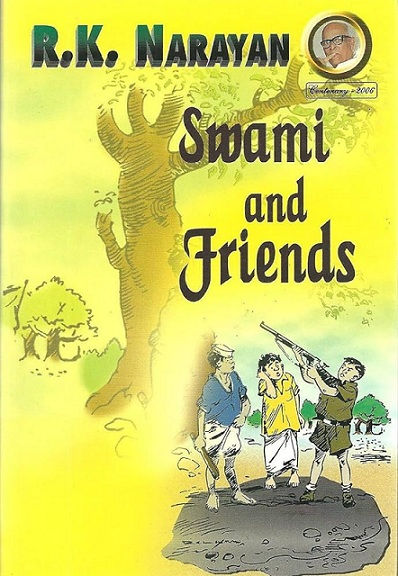
In plain words, Nagaraj is a simple man. When you really (‘really’ like the way Samantha says, “I reaaaaally missed you Varun” in NEP) read, Nagaraj is a phenomenon. I remember one of my friends wanting to make a story about a psychopath, from psychopath’s point of view. It’s one such story. Nothing affects Nagaraj. He is a true product of the universe. He knows nothing he does is going to have any effect on anyone. He does what he wants without the slightest of guilt. He is so nice that he can’t hurt anyone. But Narayan doesn’t make him a sympathetic character just because he’s nice. He’s plain and that’s that.
He is a man living in peace – sitting in his pyol and relishing life’s finer details – in Kabir Street, one of the posh localities in Malgudi. He has inherited wealth from his father, which is enough for him not to work. Even though he goes to his friend’s sari shop, he doesn’t get paid and his friend doesn’t pay him too. The reason for Nagaraj to do work for free is that he doesn’t want to be constrained to a place. His friend doesn’t question him too. That’s how beautiful their understanding is. That’s how he’s with everyone. He’s torn between his wife and mother but doesn’t get criticized by both of them. After his mother passes away, he feels sad for time being but he rarely misses her. His brother constantly criticizes him but he doesn’t talk back.
His only point of Interest is Tim. But again he doesn’t question why he left his parents place, where is he going, why he is coming late etc. He can’t stop him from doing that. He’s so struck that he can’t open his mouth to ask Saroja to stop playing her instrument even though it irritates him a lot. It’s the same with anyone he meets. All the talking happens inside him and say it out.
Narayan is such an unexplainable genius, which can only be felt. Take a simple action which happens in the book, where he wants to buy cotton so that he could stop hearing music from Saroja’s harmonium. He first asks his wife, who says no, he then asks her to check with their neighbor who always has cotton, for which Sita says that if he had had a cut or bruise she could have asked but what reason could she state now. I mean if Sita wanted she could have of course asked but she finds pleasure in chiding her innocent/ naïve husband (did you notice such pleasant intimacy with them which increases post the death of Nagaraj’s mother). He then goes to his usual abode, Nameless Coffee shop (oh how I want to name it like this, if at all I open a coffee shop) and wants to ask about it but couldn’t because he can’t make his friend understand. Next, he goes to his doctor friend, whom he was meeting after long. He of course couldn’t ask cotton from a person whom he has met after ages, so he lies about having a problem with his ear, removing wax from it, blah blah, which leads to the doctor giving some advice and prescription for medical tests. He comes out from the clinic knowing that the exercise has become futile, goes to a shop nearby, asks cotton there and the shopkeeper asks about, “why he wants cotton”. Nagaraj being Nagaraj, he couldn’t say why. He is confused why people always question back when he asks something. But finally gets wick instead of cotton. After successfully buying that and coming home, tearing the prescription because his wife would panic, his wife snatches the wick from him saying that she was planning to buy wick for lights. The whole series of events is so organic. It’s not laugh out loud but innate humor. Many would even ask what’s so special. But such a coherent sequential way of organically writing an event is something of the highest value. In fact the cotton appears earlier also, so Narayan has even done a Chekhov’s gun.
Even the part which is revered and found to be suspenseful, about Tim’s journey to Kismat, we don’t get to know why he left house, why he comes back. How can someone leave house and come back and be normal, we don’t get to know. Nagaraj too doesn’t fret or fume. Rather he is just mouth stuck because he can’t talk. Are we reading the whole book from Nagaraj’s point of view, even though it’s written in third person? Or is the third person an unreliable narrator. There are so much to ponder. What’s worse is I can’t discuss this with anyone. Either no one would have read this or no one would want to read such a ‘simple’ book. And even if they read, they’re going to say, why is nothing happening in the book. Something which they won’t complain when they read ‘The Brothers Karamzov’, even though it’s not moving, because the greatness is visible. Here it’s not out in open, but it’s not buried like few Tamil books like ‘ Kagidha Malargal ’ whose author doesn’t even have a Wikipedia page. It has its own set of audience who are not going to search in Wikipedia. That’s another story altogether.
I don’t know with what notion I started to write and what it ended out to be. May be just a rant. But isn’t that how inspirations feel? Even you don’t know what you want to write, you just want to write, like how Nagaraj wants to write about Naradha Puranam.

Comments