

Ryanair and Price Elasticity of Demand
- Trinity Auditorium

- Jun 2, 2025
- 1 min read

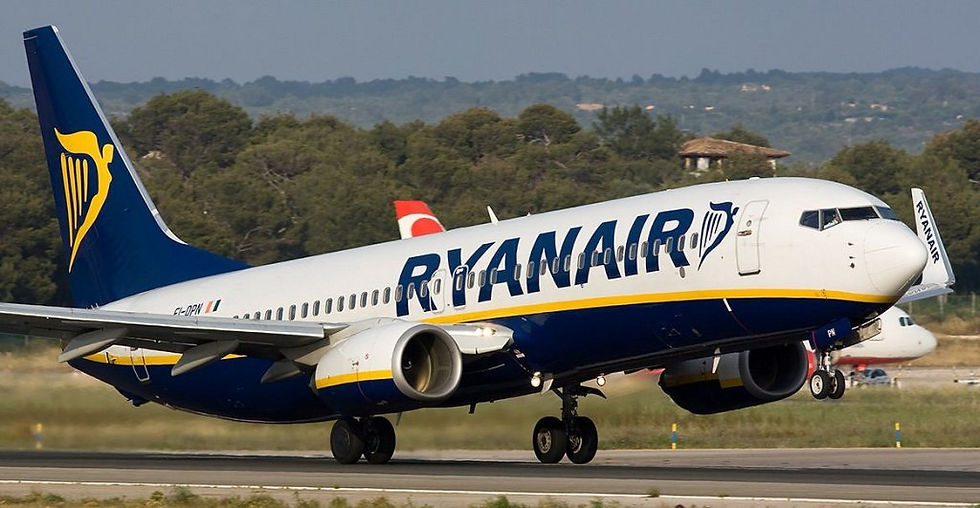
A recent article in the Economic Review magazine discussed the cost-of-living crisis and the airline industry with a focus on Ryanair. As well as supply and demand the article addresses the theory of price elasticity of demand (PED). This measures the relative amount by which the quantity demanded will change in response to change in the price of a particular good. PED can be calculated using the revenue method, which compares the changes in price with the change in total revenue – P X Q. The above table shows the relationship between elasticity and total revenue and Ryanair’s accounts for 2023 and 2024.

In looking at Ryanair’s accounts for we can see the following price (average fare) and the quantity of customers. If you work out the PED from the above figures you get the following:
The calculations over the period of time indicate that the demand for air travel was inelastic -0.72. Budget airline customers are known for their sensitivity to prices, yet as real incomes decline, their demand tends to exhibit less elasticity. As the cost of living continues to rise, the most effective way to boost demand and increase revenue may be to further reduce flight prices, up to the point at which demand becomes more elastic.
Source: Economic Review – February 2025
For more on Price Elasticity of Demand view the key notes (accompanied by fully coloured diagrams/models) on elearneconomics that will assist students to understand concepts and terms for external examinations, assignments or topic tests.

Comments